

Eczema vs Rosacea
Two common skin conditions that can cause a lot of discomfort and impact your daily life are eczema and rosacea. Both are long-term conditions, and they are easy to mix up. Both can cause redness, bumps, and changes in skin colour, and they tend to flare up and then settle down over time. While they can look very similar, there are some key differences between the two. Knowing the basics can help you understand what you are seeing, and when it may be time to ask for help.
What Is Eczema?
Eczema, also known as atopic dermatitis, is a group of chronic skin conditions that make patches of skin dry, itchy, red, and inflamed. Experts sometimes call it “the itch that rashes,” because the itching often comes first. Eczema can appear anywhere on the body.
It most often starts in childhood, between about 2 months and 5 years of age, but it can continue into adulthood or, in rare cases, start later.
On the face, eczema tends to show up around the eyes and lips, and in babies it often affects the cheeks and forehead. When it is on lighter skin, the rash may look red or pink. On darker skin, it may look brown, grey, or purple.
An eczema rash usually lasts for days, or even weeks.
What Is Rosacea?
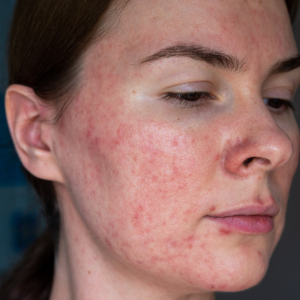
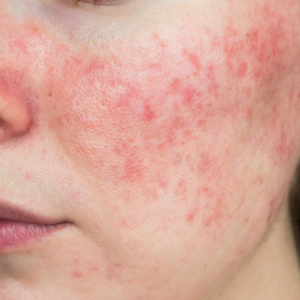
Rosacea is a chronic inflammatory skin condition that mainly affects the central part of your face. It often causes redness, flushing, swelling, and small acne-like bumps on the cheeks, nose, forehead, and chin. One feature that stands out is visible blood vessels under the skin, which is not common with eczema.
Rosacea is most common in adults aged 30 and older, and is uncommon in young children. So, does rosacea itch? Unlike eczema, rosacea rarely causes strong itching. Instead, people often describe a hot, tight, or burning feeling. Rosacea flushing may come and go within minutes, while an eczema rash lingers much longer.
Eczema vs Rosacea: Key Differences
When comparing eczema vs rosacea, a few clues can help you tell them apart.
Location and sensation
Rosacea usually stays on the central face and is often symmetrical. Eczema can appear anywhere on the body and, on the face, tends to settle around the eyes and lips.
Eczema is intensely itchy and may lead some people to scratch until the skin bleeds. Rosacea is more likely to feel hot or tight, and to show visible blood vessels.
Who each condition affects
Eczema is more common in children, while rosacea is more common in adults. The two conditions can also overlap, so it is possible to have both at the same time. Because rosacea vs eczema can look so similar, a professional opinion is often the only way to be sure.
How Do Eczema and Psoriasis Differ?
People often wonder about eczema vs psoriasis too, since both can be itchy and red.
Psoriasis is an autoimmune condition, which means the immune system mistakenly attacks healthy skin. It usually creates thick, red patches called plaques, topped with a silvery-white scale, often on the elbows, knees, and scalp.
The biggest difference in the psoriasis or eczema question is the itch. Eczema usually itches more intensely, sometimes enough to disturb your sleep. Psoriasis patches also tend to have more clearly defined edges.
When these symptoms appear on the face, they can be hard to tell apart by sight alone.
When to See a Healthcare Professional
Because these conditions look so alike, self-diagnosis can be tricky. It is always recommended to speak to a healthcare professional if you have:
• Redness, itching, or irritation that does not improve with over-the-counter products
• Skin that gets worse over time
• A new or unusual skin change that does not heal
This is especially true if you are unsure whether a spot is eczema or something more serious. In that case, only a professional can tell you for certain.
Getting the right diagnosis for your skin condition matters, because treatments differ. Some treatments that help eczema, such as certain steroid creams, may actually make rosacea worse. A doctor can usually diagnose either condition with a visual exam, and create a care plan that is tailored to your symptoms and lifestyle.
Conclusion
Eczema vs rosacea can be confusing, because they share redness and flare-ups. Still, the clues are there. Eczema is itchy and can appear anywhere on the body, while rosacea brings facial flushing and visible blood vessels, usually in adults. If you are not sure what you are dealing with, speak to your family doctor or dermatologist. They can help you find answers and the right care.
References
Healthline: Eczema vs. Rosacea: Pictures, Comparison, Chart, and More
Bryn Mawr Dermatology: Eczema vs Rosacea: How to Tell the Difference
Spot Check Clinic: What’s the Difference Between Rosacea and Eczema?
Verywell Health: Do You Have Rosacea, Psoriasis, or Eczema?
Medical News Today: Rosacea vs Eczema: Symptoms, Causes, Treatments, and FAQs