

Eczema vs Athlete’s Foot
Eczema vs Athlete’s Foot: How To Tell the Difference on Your Feet
Two conditions that can leave your feet itchy, cracked, and peeling are athlete’s foot and eczema. One is a fungal infection that spreads from person to person. The other is a long-term inflammatory condition linked to a weakened skin barrier.
They can look remarkably alike on the feet, yet they call for two different treatments, so knowing which one you are dealing with helps you get relief faster and avoid products that will not work.
What Is Athlete’s Foot?
Athlete’s foot, which doctors call tinea pedis, is a fungal infection of the skin. It is caused by dermatophytes, the same group of fungi behind ringworm. These fungi thrive in warm, moist places, so common sources include:
● Damp socks
● Closed shoes
● Locker rooms
● Saunas
● Public showers
Athlete’s foot is contagious. It can spread through skin-to-skin contact or through shared towels, shoes, and surfaces.
What Does Athlete’s Foot Look Like?
It usually starts as athlete’s foot between toes, where the skin becomes cracked, peeling, or scaly. The affected area may look reddish, greyish, or purplish depending on your skin tone. Some people develop blisters, or dry scaly patches on the sole that spread up the side of the foot.
Itching, burning, and stinging are the most common complaints.
What Is Foot Eczema?
Eczema is a group of long-term inflammatory skin conditions linked to a weakened skin barrier, which is the outer layer that holds moisture in and keeps irritants out. The most common form is atopic dermatitis. Experts believe eczema develops from a mix of genetic and environmental factors.
When eczema affects the feet, it often appears as dermatitis on soles of feet, or on the ankles and tops of the feet. Eczema on toes is less typical than athlete’s foot in that spot. Foot eczema is frequently linked to dyshidrotic eczema, which causes tiny, intensely itchy, fluid-filled blisters on the soles and palms.
Common eczema triggers include:
● Soaps
● Detergents
● Fragranced lotions
● Dust mites
● Pet dander
Eczema is not contagious.
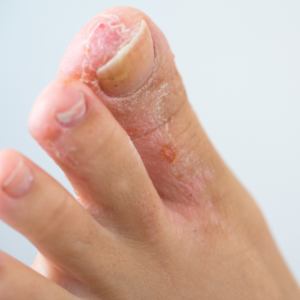
Eczema vs Athlete’s Foot: The Key Differences
Both conditions cause itching, dryness, scaling, cracking, and inflammation, so symptoms alone can mislead you. The following differences are more reliable:
Where It Shows Up
Athlete’s foot favours the spaces between and under the toes, though it can spread to the sole, heel, and toenails. Foot eczema more often affects the soles, ankles, and tops of the feet. If you also have patches elsewhere on your body, eczema is more likely.
Whether It Spreads to Others
Athlete’s foot is contagious. Eczema is not.
How Long It Lasts
With the right treatment, athlete’s foot usually clears within one to eight weeks, although reinfection is possible. Eczema is a long-term condition that flares and settles over time and needs ongoing management.
How the Complications Compare
Both can produce red pustules on feet. Athlete’s foot can occasionally trigger blisters, open sores, and pus-filled bumps, and infected eczema can do the same. Pus, swelling, or fever is a reason to contact a healthcare professional promptly.
How a Healthcare Professional Tells Them Apart
Searching pictures of athlete’s feet or scrolling images of athlete’s foot online can be a useful starting point, but photos cannot confirm a diagnosis. Both conditions are usually identified through a physical exam and a symptom history. Your provider may scrape a small skin sample to look for fungal spores, use patch testing to identify eczema triggers, or in rare cases take a biopsy.
How Do You Treat Athlete’s Foot and Foot Eczema?
Treatment is where the distinction really matters. Athlete’s foot is treated with antifungal products, and sometimes with oral antifungal medication in severe cases. Options include:
● Creams
● Ointments
● Sprays
● Gels
● Powders
Eczema cream will not clear a fungal infection.
Foot eczema treatment works differently because there is currently no cure for eczema. Care focuses on controlling symptoms through daily moisturizing, avoiding known triggers, and prescription options such as topical anti-inflammatory medications, phototherapy, or systemic treatments. Antifungal products will not help eczema. If an over-the-counter antifungal has not improved your rash within two weeks, see a healthcare professional.
Supporting Eczema Care From Within
Research into the gut-skin axis has drawn attention to microbiome balance in eczema care. ProZema is an oral probiotic formulation with a patented blend of three strains, developed to help reduce the symptoms of atopic dermatitis (eczema) in children 4 years and older. It is intended to complement dermatology care, not replace it, and it is not a treatment for athlete’s foot or any fungal infection.
Getting the Right Care
The eczema vs athlete’s foot question comes down to cause. One is a contagious fungal infection that antifungals can clear. The other is a long-term inflammatory condition managed over time. Location on the foot, whether it spreads to others, and how it responds to treatment are your best clues. If a rash on your feet is new, severe, or not improving, speak to your family doctor or dermatologist to come up with a plan tailored to your symptoms and lifestyle.
References
Medical News Today: Athlete’s Foot vs. Eczema: Comparison and Identification
Dermatology Advisor: Athlete’s Foot vs. Eczema: Comparing Diagnoses and Treatments
MyEczemaTeam: Athlete’s Foot or Eczema on the Feet? 7 Differences to Keep in Mind
Healthline: Athlete’s Foot or Eczema? Definitions, Pictures, and More
Revival Research Institute: Athlete’s Foot vs. Eczema: Understanding the Key Differences