
The Best Probiotics for Eczema
Eczema, also known as atopic dermatitis, is a long-term skin condition that leaves the skin dry, itchy, and inflamed. It affects about 20% of children and 10% of adults around the world, and it can have a real effect on your daily life. If you live with eczema, you likely know the routine of flare-ups, itching, and wondering what set them off. After trying creams and changes to their routine, many families begin to look somewhere new: the gut. This is where probiotics come in.
What Are Probiotics, and What’s in a Probiotic?
Probiotics are friendly live microorganisms. They are the “good” bacteria that naturally live in your body and help keep you healthy. You can find them in your gut, your mouth, and even on your skin.
The two most common groups are Lactobacillus and Bifidobacterium. You can also take them as probiotic tablets or supplements. In Canada, most probiotics are available as natural health products, which fall under different regulations than prescription drugs.
Foods That Contain Probiotics
You do not need a pill to get probiotics. Many fermented foods contain live, active cultures, including:
• Kefir
• Yogurt
• Sauerkraut
• Kimchi
• Kombucha
• Miso
Consequently, your diet can be a source of probiotics for you.
The Gut–Skin Axis: How Probiotics and Eczema Are Linked
Your gut and your skin “talk” to each other through what researchers call the gut–skin axis. Your gut is home to trillions of microbes that help digest food and guide your immune system. When this balance is off, it may trigger inflammation that shows up on the skin.
This state of imbalance is known as dysbiosis, and people with eczema often have it. Researchers think certain probiotics may help by calming the immune response, supporting the gut barrier, and crowding out unwanted microbes.
Which Are the Best Probiotics for Eczema?
So which probiotics are best for eczema? The honest answer is that there is no single “best” strain for everyone. For now, the research points to specific strains rather than to broad groups.
Strains that have been studied for skin and eczema support include:
• Lactobacillus rhamnosus GG
• Lactobacillus salivarius LS1
• Bifidobacterium breve BR3
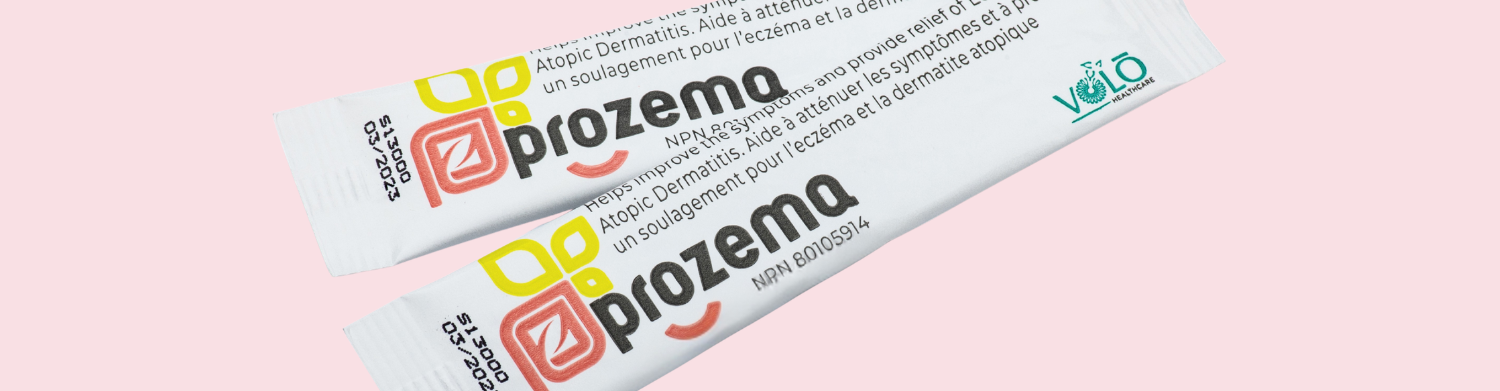
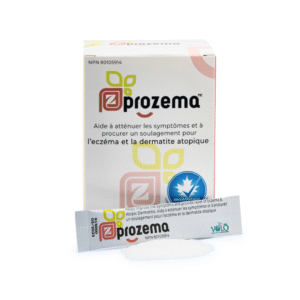
A few dermatology-focused blends have also studied Bifidobacterium lactis CECT 8145, Bifidobacterium longum CECT 7347, and Lactobacillus casei CECT 9104. ProZema is one example of this kind of dermatology-focused blend. It brings those three strains together in a single once-daily stick designed to work along the gut–skin axis, and it is licensed by Health Canada to help reduce the symptoms of atopic dermatitis (eczema) in children aged 4 and older.
Like any probiotic, it supports a child’s care, and does not replace the treatment a doctor or dermatologist recommends. Still, the strain is only part of the story.
Several other things shape the results:
• The dose, or how many live cultures the product contains
• How the probiotic is delivered to your gut
• Whether it is paired with a prebiotic to feed those cultures
• How consistently you take it each day
Speak to your healthcare provider or pharmacist if you are looking for probiotics or ProZema.
Conclusion
When it comes to the best probiotics for eczema, the science is promising. The results of probiotics depend on the strain, the dose, and how consistently you use it. However, probiotics are not a replacement for medical care, and they work best alongside the treatment plan your doctor or dermatologist recommends.
References
MyEczemaTeam: Can Probiotics Help With Eczema? What the Science Says
Seed: Probiotics for Eczema: A Science-Backed Guide for Skin Health
WebMD: Supplements for Eczema: What You Should Know
NIAID: NIAID Discovery Leads to Novel Probiotic for Eczema
National Eczema Society: Diet and Eczema